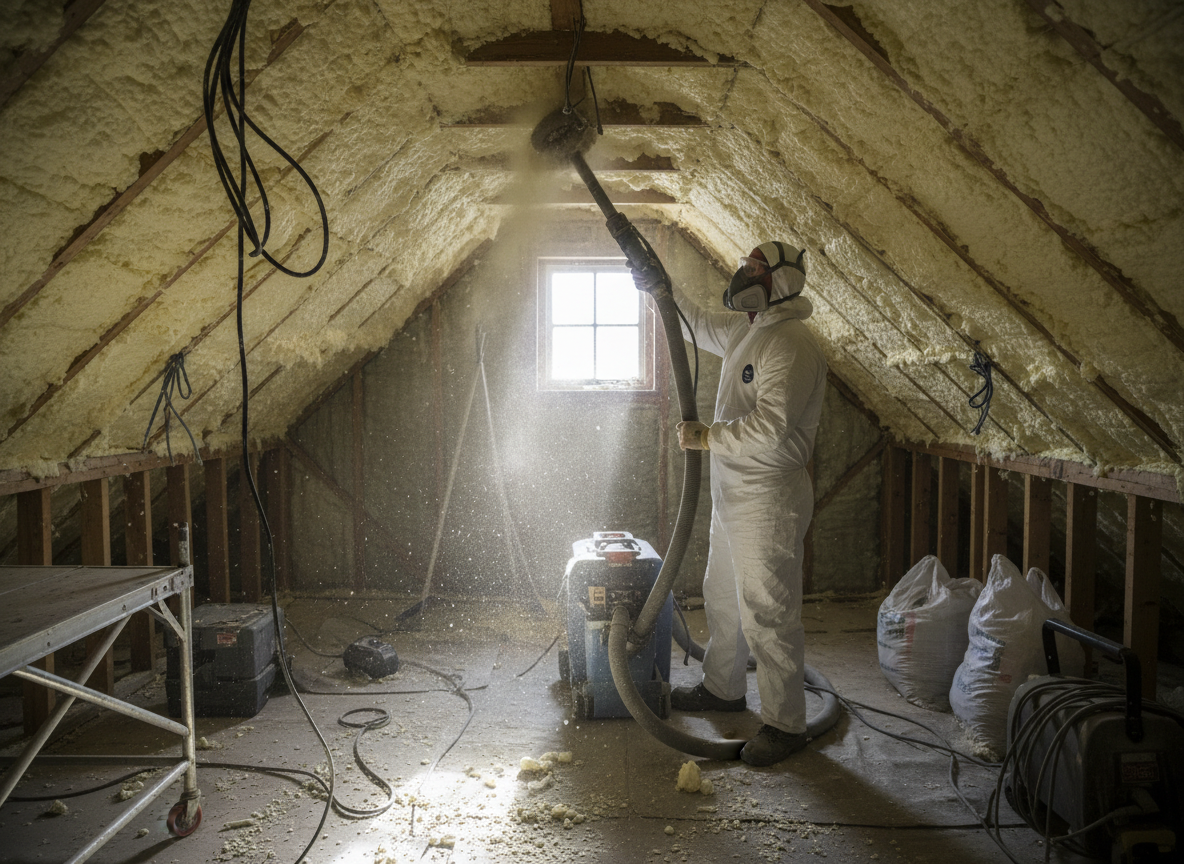
Telford's post-war housing stock, especially in estates around Halesfield and Madeley, frequently features cavity walls and lofts where thermal spray foam was applied in the 1970s and 1980s to improve energy efficiency. Over time this foam degrades, traps moisture against brick and concrete, and reduces ventilation in homes built on the area's clay-heavy soils. Removal requires controlled mechanical extraction combined with moisture testing to prevent hidden damp from migrating into timber joists or affecting neighbouring properties.
Edge cases in the Telford area often involve foam that has bonded to electrical cabling or pipework running through lofts and cavities. Technicians must map services first and work in sections to avoid damaging original 1960s-70s wiring common in these homes. Shropshire's frequent rainfall and high humidity accelerate foam breakdown, so jobs scheduled after prolonged wet periods demand extra drying time before any re-insulation work can begin.
Regulatory considerations include ensuring extracted material is disposed of correctly under UK waste rules and that ventilation is restored to meet current building standards. In older Telford terraces, partial removal may be needed where full extraction risks compromising party walls. Homeowners should expect the process to reveal original insulation gaps that were masked by the foam, requiring separate attention once the thermal material is gone.
Technician insight
In Telford, the thing that catches most people out with thermal spray foam removal is how often 1970s homes in Halesfield and surrounding estates have foam that has wicked moisture from the local clay soils straight into the cavity, so you end up fixing hidden damp that only appears once the foam is gone.
Cavity Foam Removal in Halesfield Terrace
Homeowner noticed persistent damp patches on internal walls after heavy winter rain. Inspection found degraded thermal spray foam blocking vents in a 1970s cavity wall. We extracted the foam section by section, dried the brickwork and restored airflow. The property dried out without further intervention.
How it works
- 1
Site Assessment
Inspect cavities, lofts and walls in the Telford property to identify foam type, depth and any hidden services.
- 2
Containment Setup
Seal work areas and protect floors and furniture before starting mechanical removal.
- 3
Foam Extraction
Use specialist tools to remove thermal spray foam in controlled sections while monitoring for moisture.
- 4
Clearance and Ventilation Check
Remove debris, test airflow and confirm the property meets post-removal standards before handover.
Pricing
Upfront quotes based on property size, foam depth and access conditions; no standard rates apply.