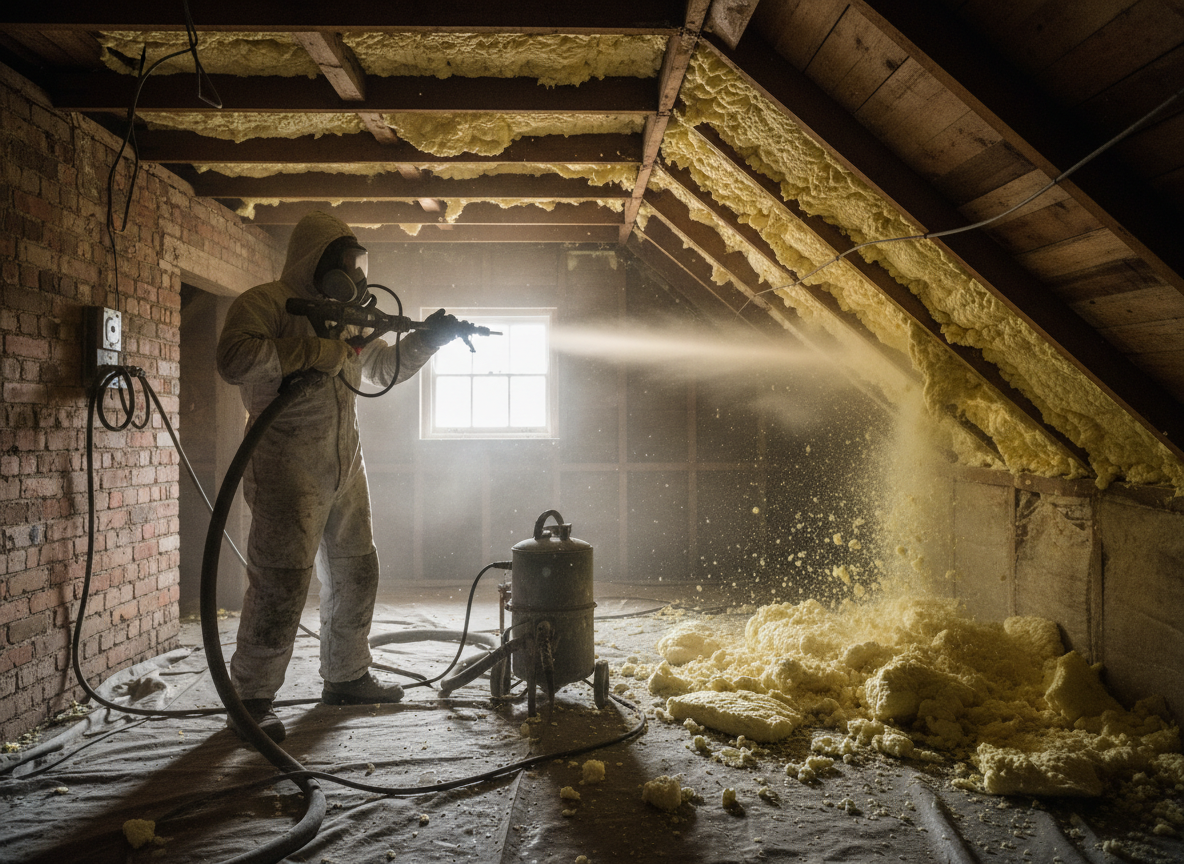
Sand blasting removes rigid polyurethane foam from roof voids and cavity walls without tearing timber or plasterboard. In Telford’s 1960s and 1970s housing stock around Halesfield and Dawley, the foam was often applied directly to rafters and ceiling joists, creating tight bonds that hand scraping cannot break. Controlled low-pressure blasting with fine media strips the material while leaving the original structure intact, provided operators adjust nozzle distance and air pressure to suit the age and condition of the timbers.
Moisture trapped behind foam in Shropshire properties leads to hidden rot along the eaves and gable ends. Sand blasting exposes these areas immediately so any affected sections can be treated before new insulation is installed. Dust extraction units connected to sealed containment tents prevent fine particles from migrating into living spaces below, a critical step in terraced and semi-detached homes common throughout the Telford new town.
Disposal of removed foam and contaminated media must follow Environment Agency rules for construction waste. Crews bag and label material on site then transport it to licensed facilities, avoiding the fly-tipping risks that have affected some rural sites near the Wrekin. Homeowners receive a waste transfer note and photographic record of the cleared void for future property records.
Access constraints in loft conversions and low-pitch roofs around Ketley and Oakengates require portable blasting rigs rather than large industrial units. Operators work from scaffolding boards laid across joists and use angled lances to reach under felt and between trusses without stepping through ceilings.
Technician insight
In Telford, the thing that catches most people out with sand blasting spray foam insulation removal is the thin plasterboard ceilings in 1970s Halesfield houses. One extra pass at the wrong angle and the board cracks, especially after weeks of damp weather when the foam has softened the paper facing.
Halesfield Loft Clearance
Homeowner in Halesfield 10 reported musty smells and cold spots. Inspection found 150 mm foam bonded to rafters and hidden wet rot along the eaves. Sand blasting stripped the foam cleanly, exposed damaged sections for treatment, and left the original timbers ready for new insulation without ceiling damage.
How it works
- 1
Site Assessment
Inspect loft or wall cavities, note timber condition, measure foam depth and check for electrical or plumbing runs.
- 2
Containment Setup
Erect dust barriers, connect HEPA extraction and seal all openings to living areas below.
- 3
Blasting Removal
Apply low-pressure sand media in controlled passes to strip foam from rafters and masonry without surface damage.
- 4
Cleanup And Disposal
Vacuum residues, bag waste, remove containment and provide waste transfer documentation.
Pricing
Upfront quotes based on void size, foam thickness and access difficulty; 24/7 availability from Halesfield base.