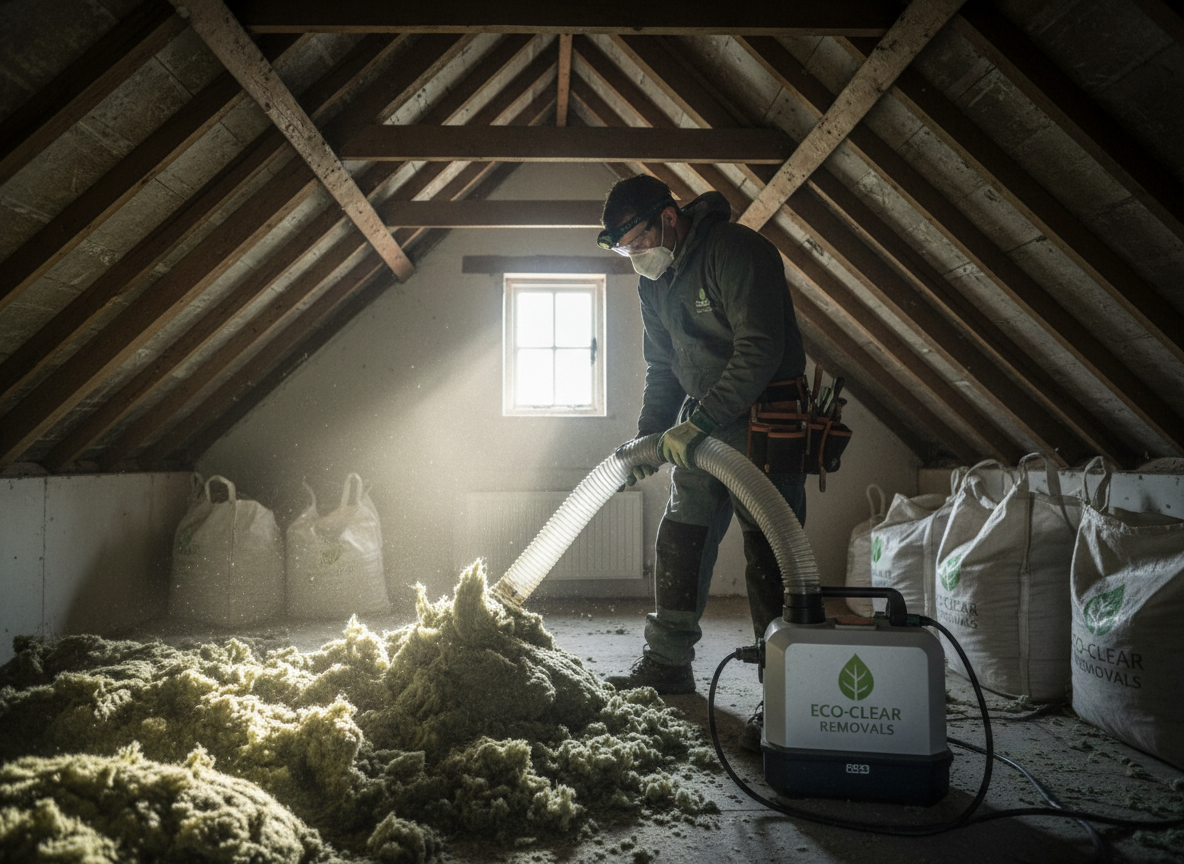
Telford homes built from the 1960s onward in estates such as Halesfield often received closed-cell spray foam in lofts and wall cavities for quick insulation. Removing it without environmental harm requires negative-pressure containment to stop particles migrating into living spaces, followed by mechanical scraping and vacuum extraction rather than solvents. Shropshire waste rules demand that removed material goes to licensed facilities that handle polyurethane, so crews separate foam from timber and plaster before transport. Older foam in TF7 properties frequently bonds to rafters, and forcing it risks damaging original roof structures that lack modern ventilation.
Moisture trapped behind spray foam in Telford lofts can lead to hidden timber decay once the material is stripped. Technicians check joists and felt for rot before disposal, because Shropshire winters bring prolonged damp that accelerates damage in post-war housing. Eco removal avoids blowing loose debris into gardens or neighbouring properties along Halesfield Road, using sealed chutes and HEPA filtration. Edge cases include foam applied over electrical cables or pipework, where slow hand removal prevents accidental cuts that could affect the whole terrace.
Access through narrow loft hatches common in 1970s Telford semis means equipment must be broken down on site. Crews work in sections to keep dust controlled, then clean all surfaces with microfibre before leaving. This approach meets local expectations for minimal disruption in dense estates where neighbours share loft spaces. Final checks confirm no residue remains that could off-gas later.
Technician insight
In Telford, the thing that catches most people out with environmentally friendly insulation removal is how 1970s foam in Halesfield lofts has bonded to felt and rafters that already suffer from poor ventilation, so any rushed pull risks tearing the roof lining and letting winter rain straight onto the ceiling.
Halesfield Loft Clearance
Homeowner in Halesfield 10 reported musty smells after heavy rain. Inspection found closed-cell foam trapping moisture against the felt. We set up sealed extraction, removed the foam in sections by hand, and disposed of it through Shropshire licensed channels. The loft was left clean with ventilation improved.
How it works
- 1
Initial Assessment
Inspect loft or cavity in the Telford property to map foam depth and any hidden services.
- 2
Containment Setup
Install negative-pressure barriers and sealed extraction points to protect the rest of the home.
- 3
Mechanical Removal
Scrape and vacuum foam in controlled sections without chemicals, separating it from timber and plaster.
- 4
Eco Disposal
Load material into sealed containers for transport to licensed Shropshire recycling facilities.
- 5
Site Restoration
Clean all surfaces and confirm no residue remains before handover.
Pricing
Upfront quotes based on property size, foam depth and access; no fixed rates published.