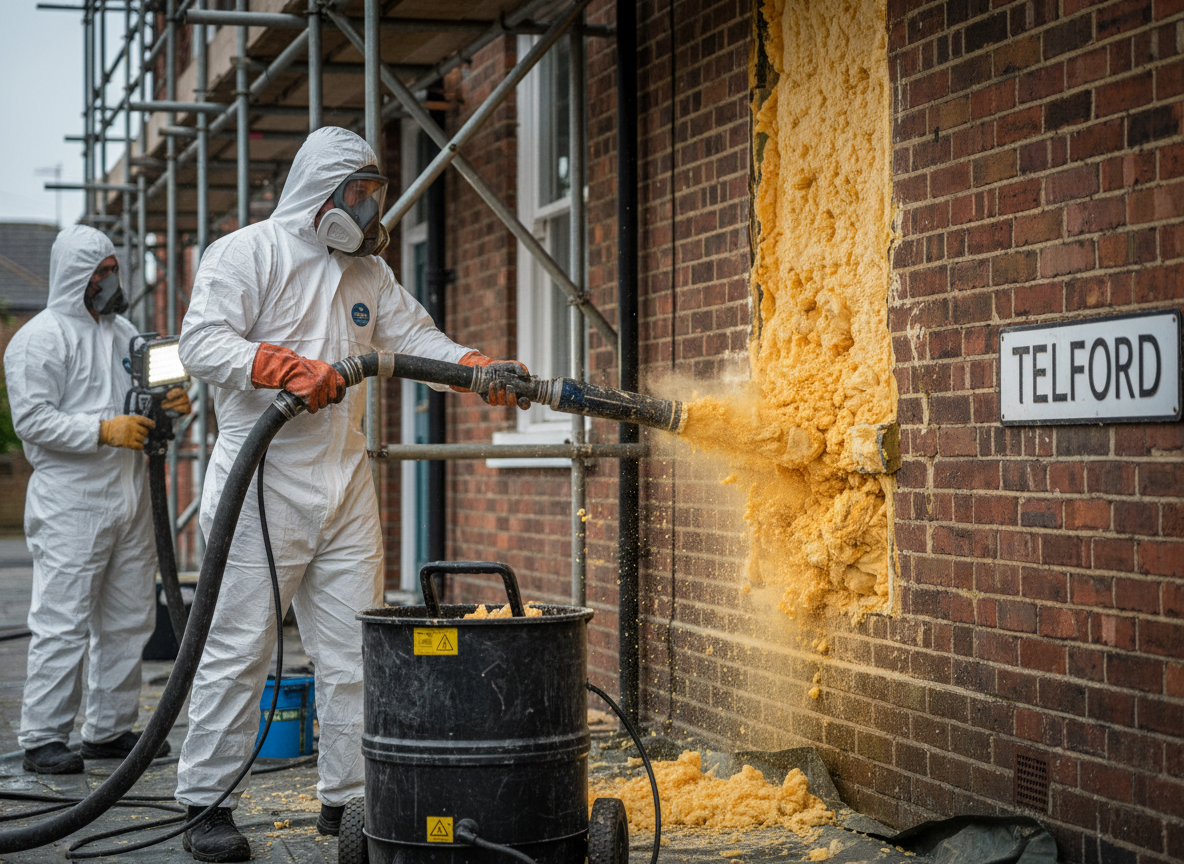
Cavity wall spray foam removal in Telford often involves polyurethane foam installed in the 1970s and 1980s new town housing stock. Over time the foam absorbs water through hairline cracks in brickwork, especially on exposed elevations facing the prevailing south-westerly winds that bring Shropshire's frequent heavy rain. Extraction requires drilling staggered access holes and using low-pressure vacuum equipment to avoid damaging the inner blockwork that is common in these properties.
Homeowners in areas such as Halesfield 10 and surrounding estates frequently discover the foam has expanded behind electrical cables or into floor joist voids, creating hidden damp pockets. Removing it without proper containment can spread dust and fibres into living spaces, so we seal rooms and use HEPA filtration throughout. Building regulations now require any replacement insulation to meet current U-value standards, which means the cavity must be left clean and dry before any new material is considered.
Terrain around Telford includes clay-heavy soils that hold moisture against foundations, increasing the risk of water tracking up the cavity. This makes thorough drying and inspection of weep holes essential after foam removal. We also check for bridged cavities at DPC level, a common issue in split-level homes built on the sloping ground found around Dawley and Madeley.
Technician insight
In Telford the thing that catches most people out with Cavity wall spray foam removal is how often the 1970s foam in Halesfield and Dawley homes has wicked moisture from the clay soils and driving rain, turning what looks like a simple vacuum job into a much longer drying process once you open the cavities.
Halesfield 10 Terrace With Trapped Damp
A 1976 mid-terrace showed persistent internal damp on the gable wall. We found the cavity foam saturated and bridging the DPC. After extraction and drying the wall dried out and the owner could proceed with re-plastering.
How it works
- 1
Site Survey And Moisture Mapping
We inspect every elevation, drill test holes and use moisture meters to map where the foam has degraded.
- 2
Controlled Extraction
Staggered access holes are drilled and low-pressure vacuum equipment removes the foam while containing dust.
- 3
Cavity Cleaning And Drying
Remaining residue is cleared, weep holes are cleared and the cavity is left to dry before any further works.
- 4
Making Good
Holes are filled with colour-matched mortar and the property is left ready for the next stage of insulation or repair.
Pricing
Cost depends on property size, number of elevations affected and access difficulty; we provide an upfront quote after the survey.