2026-10-22 ·
Managing Condensation Issues After Spray Foam Removal in Telford Homes
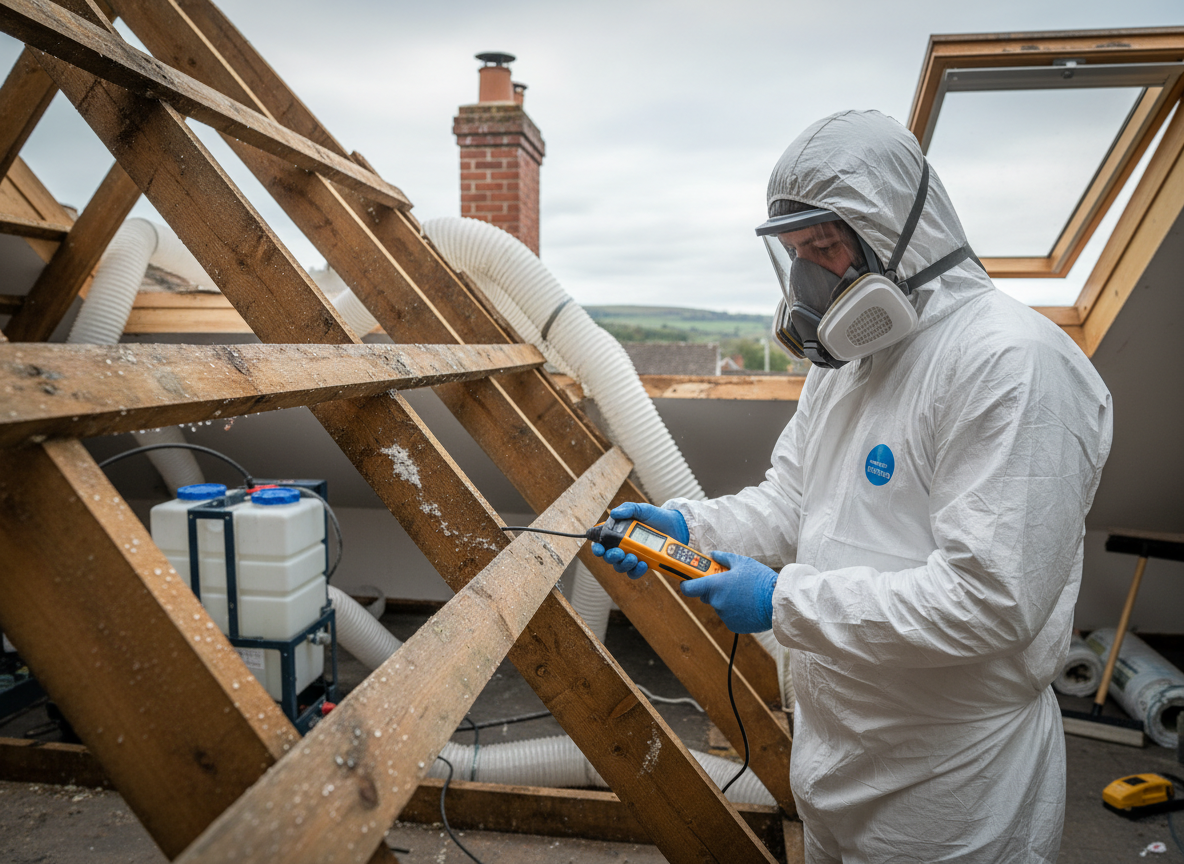
Condensation after spray foam removal in Telford homes is best controlled by restoring loft ventilation within 48 hours and maintaining indoor humidity below 60 percent during the first month. Older properties around Halesfield and Madeley commonly show this issue because closed-cell foam previously sealed roof voids that now allow warm air to meet cold rafters once more.
Why Condensation Develops in Telford Lofts
Telford's mix of 1960s-1980s semis and terraces means many roofs were insulated with spray foam in the last 15 years to meet mortgage requirements. Once removed, the original timber structure is exposed to Shropshire's frequent winter rainfall and cool nights that drop below 5°C. Warm air rising from living spaces meets these colder surfaces and forms moisture on rafters and felt. Without the foam barrier, this cycle repeats daily until ventilation is improved. Properties near the Ironbridge Gorge also experience higher ground moisture that travels upward through chimneys and party walls, accelerating the problem in semi-detached homes.
Assessing Moisture Levels in Local Properties
Start by placing digital hygrometers in the loft and bedrooms for two weeks after removal work finishes. Readings above 65 percent relative humidity signal the need for immediate action. Check for water staining on rafters in homes around Wellington and Newport, where many roofs have original clay tiles that retain damp longer than modern concrete ones. Inspect the 10 Halesfield Rd area properties for blocked soffit vents, a common finding in 1970s builds where insulation installers covered airways. Document any existing felt tears or missing ridge tiles before they worsen condensation.
Restoring Airflow and Insulation Balance
Fit continuous ridge vents and eaves baffles sized to the roof pitch found on most Telford estates. In homes built before 1980, add 50 mm of mineral wool between joists after confirming the roof is dry. Run extractor fans in bathrooms and kitchens for 20 minutes after use to cut moisture at source. Homeowners in Shifnal and Bridgnorth often benefit from positive input ventilation units that gently pressurise the loft and push damp air outward. These steps restore the balance that spray foam once provided without reintroducing closed-cell material.
Monitoring and Follow-Up Actions
Re-check humidity weekly for the first eight weeks and after heavy rain. Wipe any surface moisture with absorbent cloths and improve loft access hatches with insulated covers. If readings stay elevated, review the loft spray foam removal process to confirm all material was cleared from junctions. For older buildings, compare findings with guidance in the article on differences in spray foam removal for older Telford buildings versus new builds. Persistent issues may require a full insulation assessment to rule out hidden leaks.
When Professional Support Is Needed
Contact a 24/7 team if mould appears on timber or if humidity remains above 70 percent despite ventilation upgrades. Crews familiar with Telford stock can install targeted vents or thermal barriers without disturbing existing electrics. Service is available around the clock from the base at 10 Halesfield Rd, Halesfield 10, Telford TF7 4QP, UK. Early intervention prevents timber decay that can affect mortgage valuations in the wider Shropshire region.